











Frequently Asked Questions
- Show All
- After Sales Questions
- Air Conditioning Questions
- Commercial HVAC Questions
- Installation Questions
- Pre-Sales Questions
- Servicing & Maintenance Questions
How much will the installation cost?
The cost of installation for air conditioning or HVAC systems can vary depending on several factors, including the type and size of the system, the complexity of the installation, and the specific requirements of your home or business.
To give you an accurate estimate, it would be helpful to know more details about your specific needs, such as:
- Type of system (split AC, ducted system, etc.)
- Size of the space to be cooled/heated
- Any additional customization or installation complexities
- Location of the property
At Bedford Air Conditioning, we provide free consultations to assess your property and offer a tailored quote based on your requirements.
How often should my air conditioning system be serviced?
Your air conditioning system should generally be serviced once a year to ensure it operates efficiently and to prevent potential issues. However, depending on the type of system and usage, you may want to consider more frequent servicing under certain conditions:
- Heavy usage: If your system is running continuously, such as in a commercial environment, or if you live in a particularly hot climate, servicing it every 6 months may be beneficial.
- Older systems: For older systems, more regular check-ups can prevent breakdowns and extend the system's lifespan.
- Allergy concerns: If air quality is a high priority due to allergies, more frequent servicing will help ensure your filters and components are clean.
Regular maintenance can improve energy efficiency, reduce running costs, and catch any potential issues before they become costly repairs.
How will I know what size Air Conditioning Unit I need?
This is a tricky one to answer without knowing a few more details. Why not let our handy tool help you decide on the best system. Just click on 'Let Dougal Choose'
Is air conditioning common in England?
Air conditioning is becoming more common in England, but it is still less prevalent than in countries with hotter climates. Here’s a breakdown of the situation:
1. Residential Use:
- Historically, air conditioning has not been widespread in homes across England. The country's temperate climate, with relatively mild summers, meant that many homes didn’t require cooling. However, in recent years, there has been an increasing demand for air conditioning in residential properties due to:
- Hotter Summers: Climate change has led to more frequent and intense heatwaves, with temperatures regularly exceeding 30°C during the summer.
- New Builds and Modern Homes: Many new homes and apartments, particularly in urban areas, are being built with AC systems or provisions for installing them due to better insulation and reduced airflow in modern buildings.
- Home Office Setup: With more people working from home, especially after the pandemic, there is growing interest in making home environments more comfortable year-round.
2. Commercial and Public Use:
- Offices and Commercial Buildings: Air conditioning is much more common in offices, retail spaces, and other commercial buildings. Most modern office buildings, shopping centres, and hotels are equipped with air conditioning to maintain a comfortable environment for employees, customers, and guests.
- Public Transport: Some public transport systems, like the newer London Underground lines and many buses, now have air conditioning, but older parts of the transport infrastructure still lack it.
3. Future Trends:
- Rising Demand: With summers becoming hotter and people prioritizing comfort at home and in the workplace, air conditioning is becoming more popular in the UK. Many homeowners and businesses are now opting to install air conditioning, especially split-system units that can provide both cooling in the summer and heating in the winter.
In Summary: While air conditioning isn't yet a standard feature in most English homes, it is increasingly common in modern properties, offices, and public buildings. The growing frequency of heatwaves and the trend toward home office setups are driving more people to invest in air conditioning, particularly in southern parts of England where summer temperatures tend to be higher.
Is there a warranty on the installation and the air conditioning unit?
Yes, all our systems come with a manufacturer’s warranty
My air con unit is discharging dirt or debris—what does this mean?
This is a strong sign the system is very dirty and needs a professional clean. The unit should be turned off to protect your air quality, and a service should be booked as soon as possible.
My air conditioning system makes strange noises. Should I be concerned?
Air conditioning units need regular maintenance to ensure that they operate at peak efficiency. Additionally, it is vital that they have been installed by fGas certified engineers. Strange sounds are always a point for concern and it is important that you have the unit checked before you continue to use it.
Running Costs of an AC Unit vs Gas Central Heating
When comparing the running costs of an air conditioning (AC) unit to gas central heating, it’s important to consider both energy efficiency and the versatility that AC systems offer. Here's why modern AC units, particularly those with heat pump technology, can be a highly efficient and cost-effective option for both heating and cooling your home.
1. Electricity vs Gas Costs:
- Electricity Costs: While electricity in the UK is generally more expensive per unit than gas (around 30p per kWh for electricity vs. 10p per kWh for gas), air conditioning systems with heat pump technology are incredibly efficient, often offsetting the higher electricity cost.
- Gas Costs: Gas is cheaper per unit of energy, but traditional gas boilers lose a portion of that energy during the heating process, making them less efficient overall compared to modern AC units.
2. Efficiency of Systems:
- AC Units (for Heating and Cooling): Modern air conditioning units with heat pump technology can achieve 300-400% efficiency, meaning for every unit of electricity they use, they can produce 3 to 4 units of heat. This makes them much more efficient than gas boilers, which lose energy through combustion.
- Gas Central Heating: Even high-efficiency gas boilers only reach around 90% efficiency, meaning 10% of the energy is wasted, reducing overall cost-effectiveness over time.
3. Year-Round Benefits:
- Air Conditioning (Heating & Cooling): One of the major advantages of AC units is their ability to provide year-round comfort by heating in the winter and cooling in the summer. You can use the same system to maintain a comfortable home in all seasons, something gas central heating cannot offer.
- Gas Central Heating: While effective for heating during the colder months, gas systems offer no cooling capability, meaning you may need additional appliances during hot weather, increasing overall costs.
4. Running Costs for Heating:
- Air Conditioning (Heating Mode): In heating mode, a split AC unit typically costs around 10p to 15p per hour to run. Thanks to their efficiency, they can be more economical than gas heating for smaller rooms or zonal heating, particularly in well-insulated homes or during mild winters.
- Gas Central Heating: While gas heating costs around 5p to 10p per hour per radiator, the overall cost can increase if you’re heating the entire home, even in rooms that aren't being used.
5. Running Costs for Cooling:
- Air Conditioning (Cooling Mode): AC units offer a cooling solution, which gas central heating lacks. Cooling a room with an AC unit typically costs 10p to 30p per hour, providing an all-in-one solution for year-round comfort. In hot weather, gas heating systems offer no alternative, meaning additional cooling units may be necessary, adding to energy bills.
6. Flexibility and Control:
- Smart Controls and Zonal Heating: Modern AC units often come with smart controls and can be integrated with home automation systems like Alexa or Google Home. This allows for precise control over individual rooms, reducing unnecessary energy consumption and offering more flexibility than traditional gas central heating systems.
Summary:
- AC Units (Heating & Cooling): With highly efficient heat pump technology, modern AC units are a cost-effective solution for both heating and cooling your home. They are particularly well-suited for targeted heating and cooling, and their efficiency can rival or even outperform gas central heating when used correctly.
- Gas Central Heating: While still cheaper for whole-home heating during cold winters, gas central heating lacks the versatility of AC systems and can lead to higher costs during hot months when separate cooling solutions are needed.
Conclusion: Modern AC units with heat pump technology are highly efficient, making them an excellent choice for both heating and cooling. Their ability to provide year-round comfort, coupled with their high efficiency (especially in smaller areas or homes with good insulation), makes them a more versatile and potentially cost-saving option compared to traditional gas central heating, which only offers heating and comes with lower efficiency. For homeowners looking for a flexible, efficient, and future-proof solution, AC systems are worth serious consideration.
What brands of heating and cooling systems do you install?
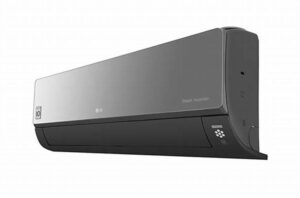
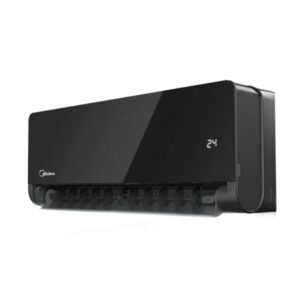
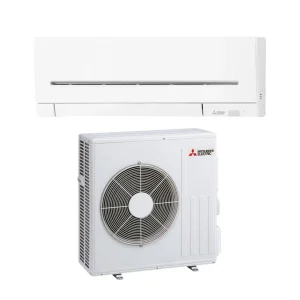
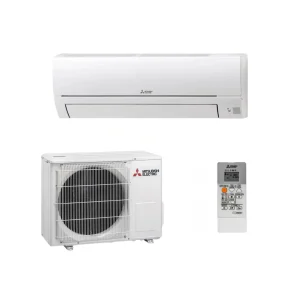
We only partner with the leading brands in climate control for homes and businesses, including Daikin, Mitsubishi, Toshiba, LG, Midea, Panasonic and Samsung.
What does HVAC stand for?
HVAC stands for Heating, Ventilation, and Air Conditioning. It refers to the systems used to regulate and move air between indoor and outdoor areas, as well as heating and cooling both residential and commercial buildings. Here’s what each part involves:
- Heating: This refers to the systems that provide warmth, typically through boilers, furnaces, or heat pumps.
- Ventilation: Ventilation ensures the exchange of air to maintain indoor air quality, providing fresh air and removing moisture, odors, smoke, heat, dust, and airborne bacteria.
- Air Conditioning: This part involves cooling and dehumidifying the air to maintain a comfortable indoor temperature, especially during hot weather.
HVAC systems are integral to maintaining indoor comfort by controlling temperature, humidity, and air quality.